


Every year, thousands of visitors from across South Africa and around the world walk through the doors of the Hector Pieterson Memorial and Museum to learn about one of the country’s most defining moments—the 1976 Soweto Uprising.
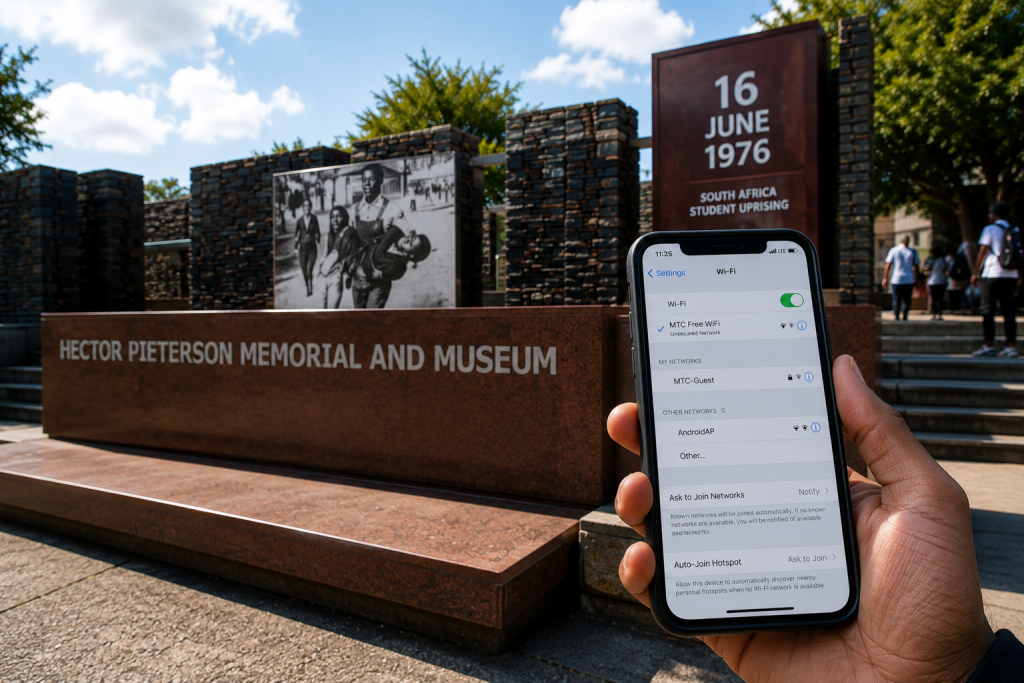
The museum stands as a place of remembrance, reflection and education, ensuring that the courage and sacrifices of the young people who fought for freedom continue to inspire future generations.
As part of its commitment to supporting digital inclusion and community development, Metropolitan Tech Company (MTC) has connected free public Wi-Fi at the Hector Pieterson Memorial and Museum, creating new opportunities for visitors to engage with the site and access information more easily.
The availability of public Wi-Fi will enhance the visitor experience by enabling learners, researchers, tourists and community members to connect while exploring the museum. It also supports access to digital content, educational resources and online information that complements the powerful stories preserved within the museum.
Chief Curator Mr. Prince Dube welcomed the initiative, describing it as an important step towards strengthening both education and heritage preservation.
“The availability of public Wi-Fi at the Hector Pieterson Memorial and Museum will significantly enhance the visitor experience while helping preserve and share the vital history of the 1976 student uprising with current and future generations.” Mr. Prince Dube, Chief Curator
For MTC, connectivity is about more than providing internet access. It is about creating opportunities for learning, supporting access to information and helping communities participate in an increasingly digital world.
By extending connectivity to places of historical and cultural significance, MTC continues to demonstrate how technology can support education, tourism and community development while preserving the stories that have shaped South Africa’s democracy.
As Johannesburg continues its Smart City journey, initiatives such as these show how digital infrastructure can enrich public spaces and make knowledge more accessible to everyone.
Because preserving history is not only about remembering the past—it is also about ensuring future generations can connect with it in meaningful ways.
